Recently, the 23rd National Conference on Electrochemistry was held in Wuhan. The conference set up sub-venues covering cutting-edge fields such as electrochemistry, batteries, and hydrogen energy, gathering industry experts and scholars to discuss new progress in electrochemistry technology.Three experts from EVE Energy—Dr. Zhao Ruirui, Director of Central Research Institute, Dr. Wang Ying, General Manager of EVE Hydrogen Energy and Director of Hydrogen Energy Research Institute, and Dr. Yuan Dingding, Director of Energy Storage Research Institute—were invited to deliver keynote speeches, sharing latest research results and showcasing EVE Energy's forward-looking R&D layout and technical strength.
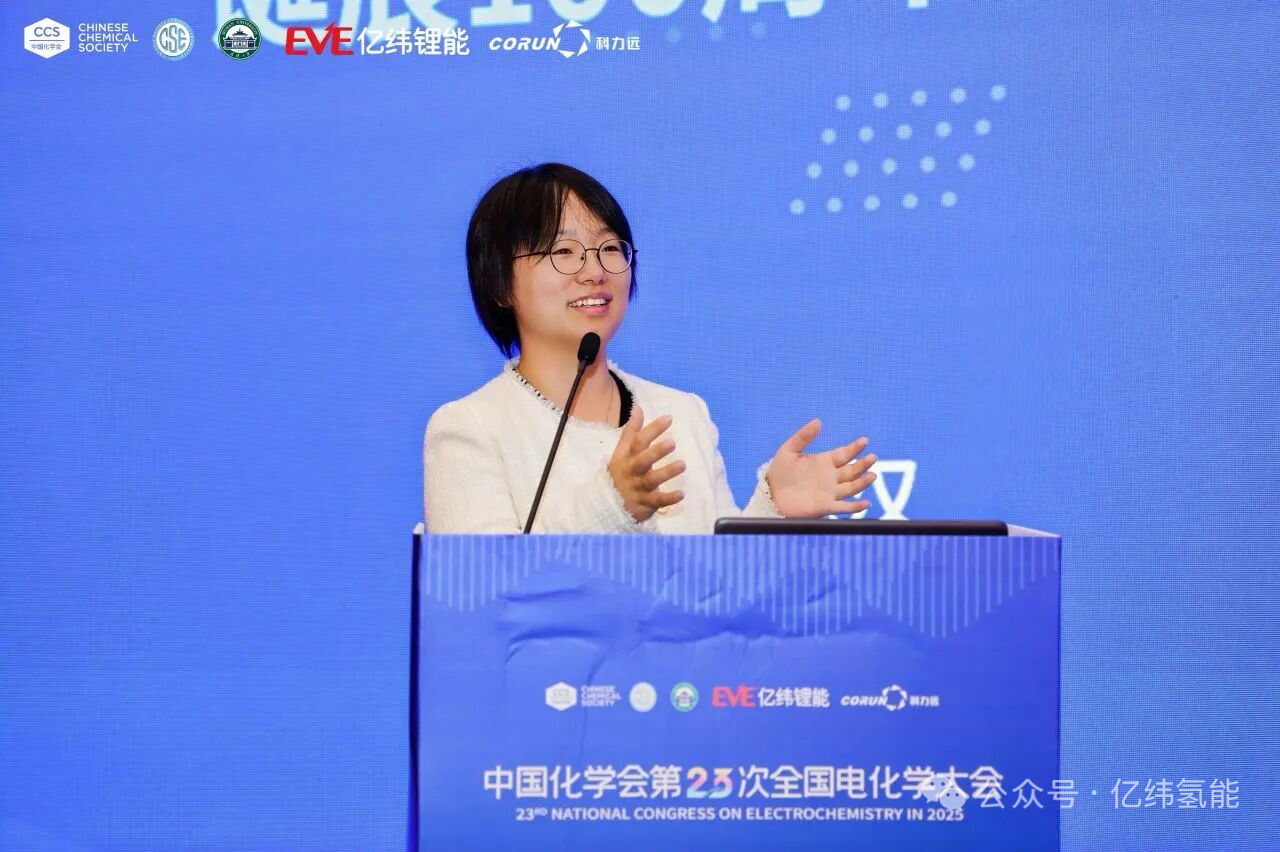
| Dr. Zhao Ruirui: Breaking the Impasse of High-Energy Density Batteries to Empower Future Powertrains
Lithium metal, with its ultra-high theoretical specific capacity and extremely low electrochemical potential, is regarded as an ideal choice for the next-generation negative electrode materials of high-performance batteries and a key direction to achieve battery systems with higher energy density.
"From an industrialization perspective, to ensure safety and reliability, high-energy density lithium metal batteries should follow the development path of 'from small batteries to large batteries', first landing in the 3C field and then gradually expanding to other fields," said Dr. Zhao Ruirui. Currently, in the 3C field, high-energy density lithium metal batteries face three major challenges: fast charging, low-rate discharge, and cell expansion.
To address issues such as SEI (Solid Electrolyte Interphase) film rupture caused by lithium dendrite growth during fast charging, EVE Energy improves lithium ion transmission rate through solvation regulation and uses inorganic composite additives to promote the formation of homogeneous SEI films, which effectively suppress lithium dendrites and enhance battery fast-charging performance and safety.
During low-rate discharge, by-products are easily generated on the lithium metal negative electrode to block the interface, leading to cycle failure and life attenuation. In addition, cell expansion intensifies with the increase of energy density: when the energy density is 450Wh/kg, cell expansion is ≥14%; when it reaches 600Wh/kg, it is ≥23%. Therefore, batteries need to adopt lightweight or new structural component designs.
At present, EVE Energy has achieved mass production of multiple models of high-energy density lithium metal batteries, with a maximum energy density of 600Wh/kg. Regarding future research directions, Dr. Zhao Ruirui stated that high-energy density lithium metal cells need to focus on two core issues: improving cycle performance under small-current conditions and researching and developing high-elasticity, pressure-resistant materials.
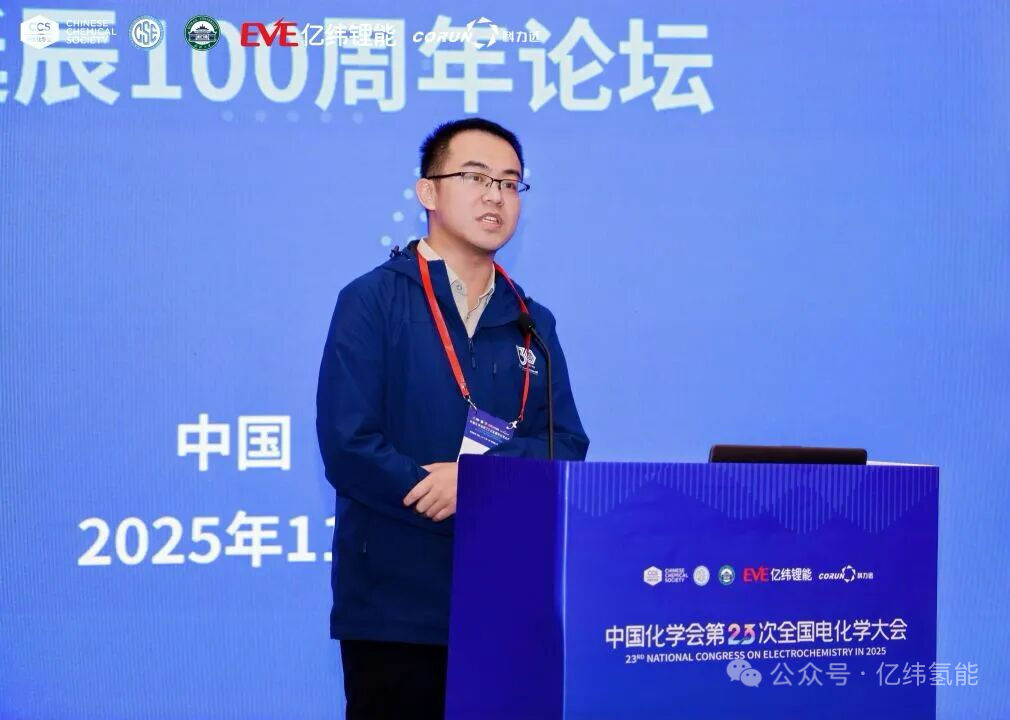
| Dr. Wang Ying: Innovating Hydrogen Production Paths to Promote Green Hydrogen Cost Reduction
Green hydrogen is a key clean energy carrier to achieve the "dual carbon" goals. AEM (Anion Exchange Membrane) electrolysis technology, with its comprehensive performance advantages, is regarded by the industry as an important path to drive green hydrogen cost reduction.
At the forum, Dr. Wang Ying systematically introduced AEM electrolysis hydrogen production technology, conducting in-depth analysis from multiple dimensions including technical positioning, application prospects, core products, and industrial practices.
He pointed out that AEM technology is the next-generation hydrogen production path with both high performance and cost advantages. Combining the core strengths of ALK (alkaline electrolysis) and PEM (Proton Exchange Membrane electrolysis), it performs excellently in current density, electrolyzer efficiency, and system power consumption. Moreover, it uses non-noble metal catalysts to achieve cost control and has currently entered the initial stage of commercialization.
Starting with AEM membrane material R&D, EVE Hydrogen Energy has gradually built a complete industrial chain from membrane electrodes, electrolyzers to hydrogen production systems. At present, the company has launched the Alkymer® series of membranes and electrolyzer products. The series of membranes feature high ionic conductivity and excellent alkali resistance stability, with an annual production capacity of over 10,000 square meters. Meanwhile, while maintaining low power consumption, electrolyzer products have approximately doubled the volume power density, offering comprehensive advantages such as low cost and easy maintenance.
Since AEM technology was transformed from the laboratory to industrialization in 2019, EVE Hydrogen Energy has continuously expanded application scenarios. Currently, its products have covered the entire industrial chain of "green power hydrogen production - hydrogen utilization", accumulating rich project experience. AEM hydrogen production systems have been commercially deployed in multiple regions across China.
| Dr. Yuan Dingding: Leading the Energy Storage Technology Direction to Co-build a New Global Energy Storage Pattern
Against the backdrop of accelerating global energy transition, the demand for energy storage continues to grow. At present, China's lithium battery industry accounts for 70% of the global market share, and Chinese companies occupy nine of the top ten global enterprises in the energy storage field, forming a complete industrial chain layout.
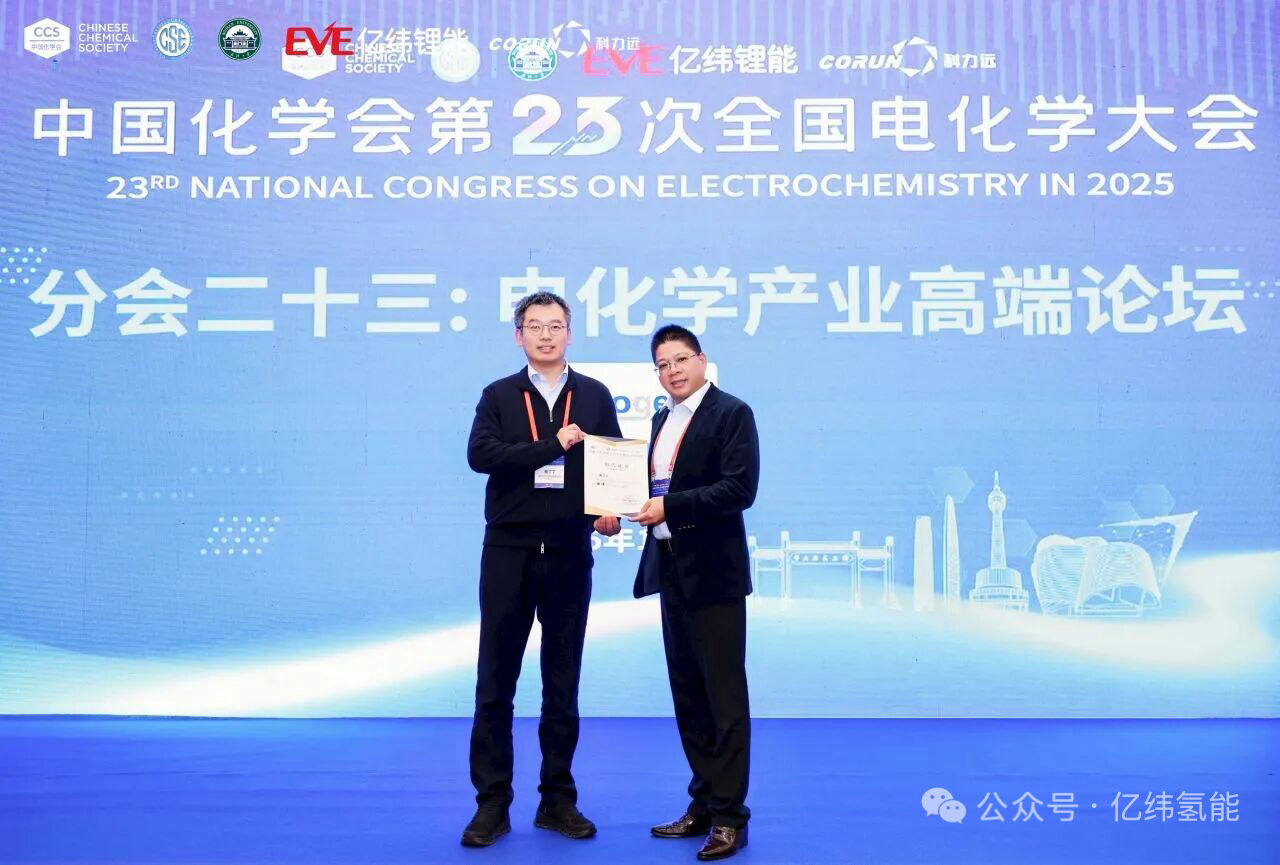
Dr. Yuan Dingding pointed out that EVE Energy has achieved leapfrog development in product performance through continuous technological innovation. The battery capacity has been iterated from 280Ah to 628Ah, making it one of the world's leading energy storage cells. EVE Energy's large energy storage cell Mr.Big, with the trilogy of industry first launch, first application and first inspection, and the subversive advantages of "halving the number of cells, reducing Pack components by 47%, and improving production efficiency by 30%", has become a benchmark solution for system integration cost reduction. It continues to verify that "for large energy storage cells, EVE provides more reliability", creating a replicable and scalable new path for the global energy storage industry. In technical exploration, the company has successfully developed 350Ah high-capacity sodium-ion cells with core performance indicators performing excellently, providing a new path for energy storage technology development.
In terms of safety, the public's expectations for batteries have upgraded from "intrinsic safety" to "super safety" and even "absolute safety". EVE Energy continuously improves safety levels through various safety designs and rigorous testing. At present, it has achieved the goal of "super safety" and is continuing to work towards "absolute safety".
With excellent products and a global service network, EVE Energy ranked second in the world in global energy storage battery shipments in the first half of 2025. It looks forward to cooperating with more partners to build a new energy storage system that is clean, low-carbon, safe, and efficient.
As a technical leader in the new energy field, EVE Energy will continue to drive innovation, deeply cultivate lithium battery technology, layout emerging fields such as hydrogen energy, deepen industry-university-research cooperation, and join hands with global partners to build a green energy system and contribute to sustainable development.